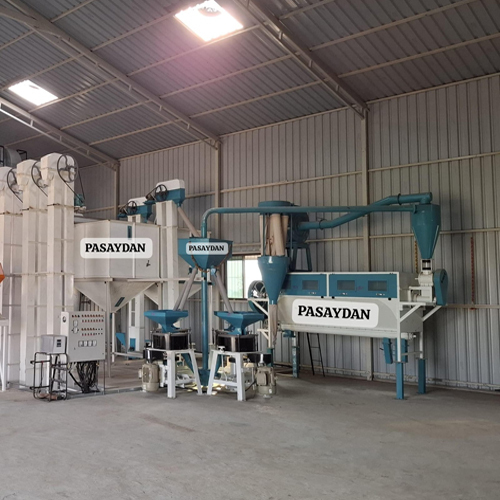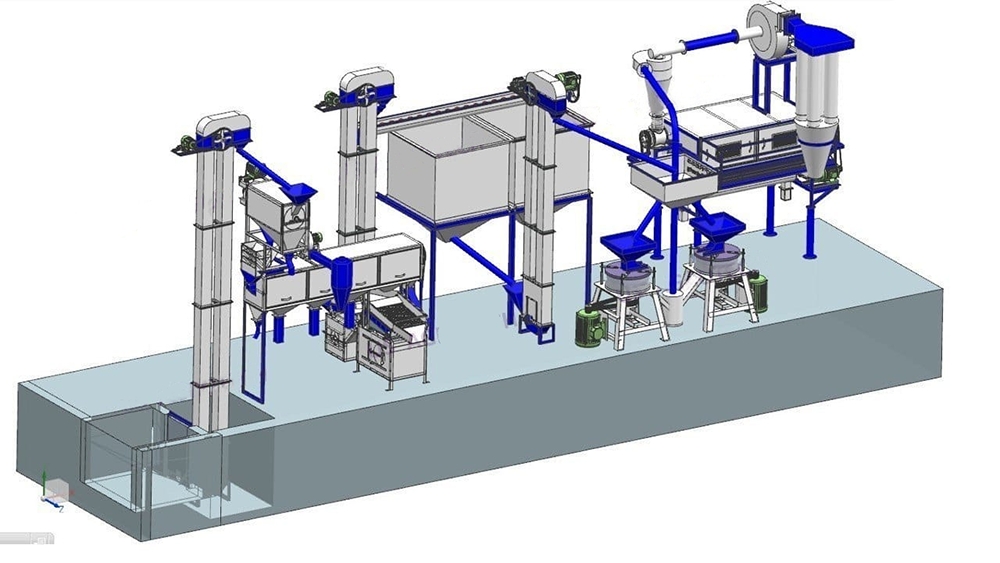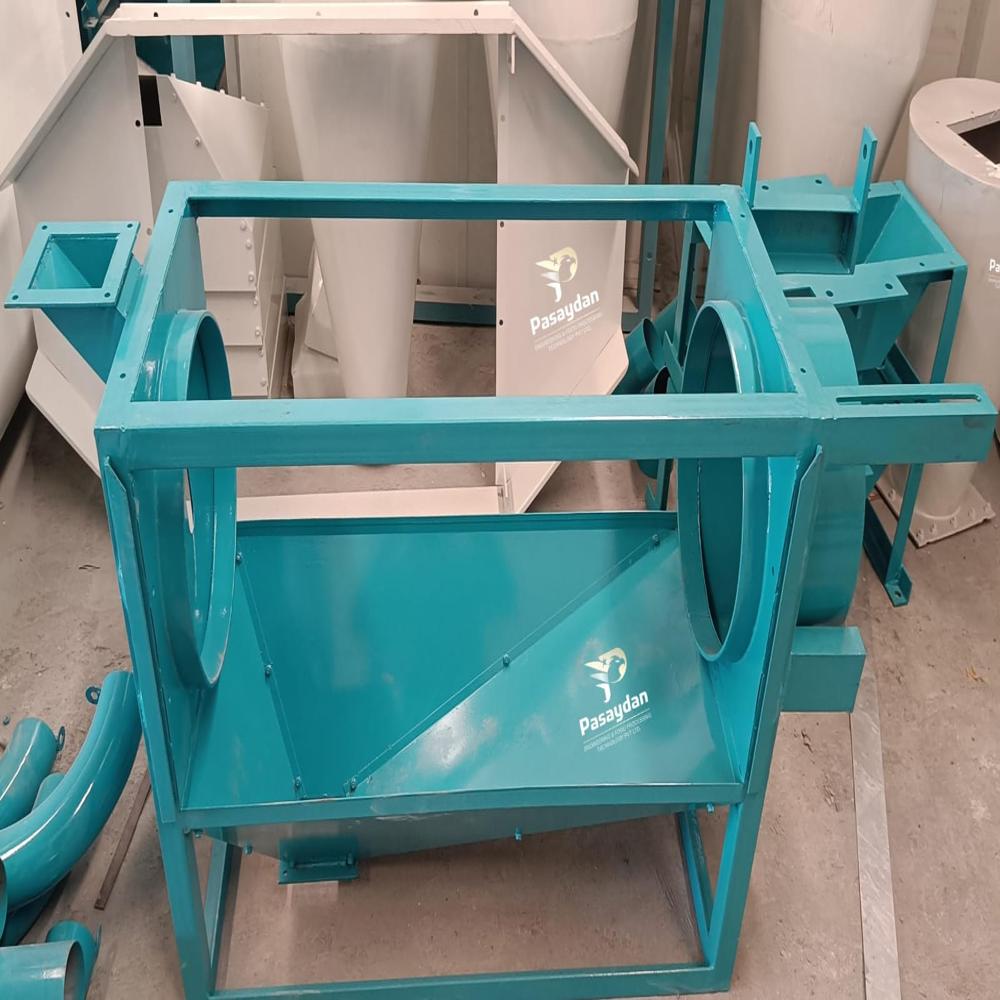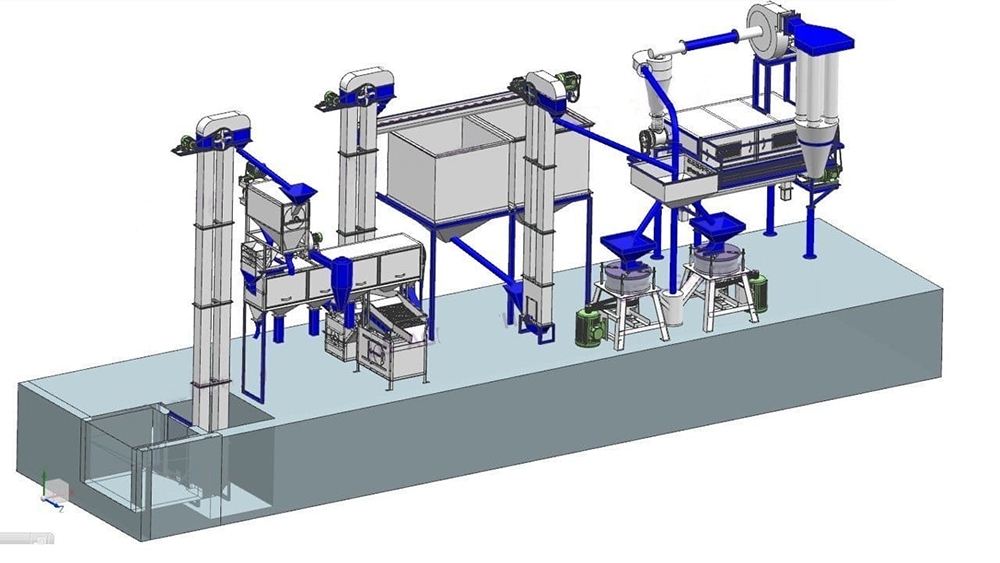
a high-efficiency, integrated system that automates the entire grain-to-flour process, from cleaning and grinding to sieving and packaging, reducing manual labor, ensuring consistent quality, and improving hygiene through automated handling and processing. These plants use advanced technology like roller mills, destoners, and dust collectors, often with PLC controls, to process various grains into fine flour with minimal human intervention, making them ideal for commercial production.
Key Components & Process
Cleaning: Grains are first cleaned using magnetic selectors, scourers, and destoners to remove impurities like metal, stones, and dust.
Tempering: Moisture is adjusted to optimal levels for milling.
Milling: Pneumatic roller mills grind the tempered grain, separating bran, germ, and endosperm.
Sieving/Purification: Plansifters and rotary sieves separate the ground material into different flour grades (like whole wheat, semolina).
Blending: Different flour streams can be blended for specific products.
Packaging: Final flour is automatically weighed and packed.
Key Features & Benefits
High Automation: Operates with little human interference, increasing productivity.
Versatility: Can handle wheat, rice, corn, and other grains.
Cost-Effective: Reduces labor costs and energy consumption through optimized power usage.
Compact Design: Many systems are designed for easy installation in smaller spaces.
Quality & Hygiene: Ensures consistent particle size and maintains high hygiene standards.